Table Of Content

Creator marketing's new job: getting brands found by AI

Table Of Content

Creator content just became one of the most strategic assets a brand owns — not for reach, not for engagement, but because it's the exact kind of independent, third-party proof AI search engines need before they'll recommend a product at all. Here's why the content already sitting in your library matters more now than it did the day it was published.

Somewhere in your organization, someone is worried about AI search. Maybe it's you. Maybe it's the SEO team, watching a chunk of organic traffic get replaced by an AI-generated answer that never sends anyone to your site. The instinct is to treat this as a content or schema problem —restructure the pages, add the markup, wait. But the data tells a different story: most brands aren't showing up in AI answers at all, and the ones that do are almost never cited from their own website. AI engines don't trust brands to talk about themselves. They trust someone else talking about the brand. Which means getting found by AI was never really a formatting problem. It's a third-party proof problem — and creator marketing has been sitting on the fix for years without knowing it.

The conversation you haven't been invited to, yet

If your company has an "AI search" conversation happening right now, it's probably in a room without you in it. SEO. Content. Maybe the CMO. The framing is almost always the same: our pages aren't optimized for how AI reads the web. Fix the structure, fix the schema, fix the findability.

That framing isn't wrong. It's just incomplete — and it'smissing the part your team already owns. Recent research into how AI enginesactually cite brands found something that should reframe the wholeconversation: when AI answers do reference a brand, the citation almostnever points back to the brand's own website. It points somewhere else — areview, a forum thread, a video, a third party talking about the product,proving your claim.

In other words, AI engines are already doing what good marketers have always known to do: they trust the customer's voice over the brand's voice. The brands showing up in AI answers aren't the ones with the best-optimized product pages. They're the ones with the most independently verifiable proof floating around the internet — proof that wasn't written by the brand.

That's not an SEO asset. That's creator and UGC marketing assets.

What "getting found" actually means now

It's worth being precise about the mechanism here, becauseit changes what "fixing" AI visibility actually requires.

Getting found by a traditional search engine was about crawlability and relevance — could the engine index your page, and did it match the query. Getting found by an AI engine is a different problem entirely. The engine isn't returning a list of links for someone to evaluate themselves. It's making the evaluation on the customer's behalf, in real time, and it needs to feel confident enough in the answer to say it out loud. That confidence doesn't come from a well-structured product page. It comes from independent, third-party evidence that the claim is actually true — for someone like the person asking.

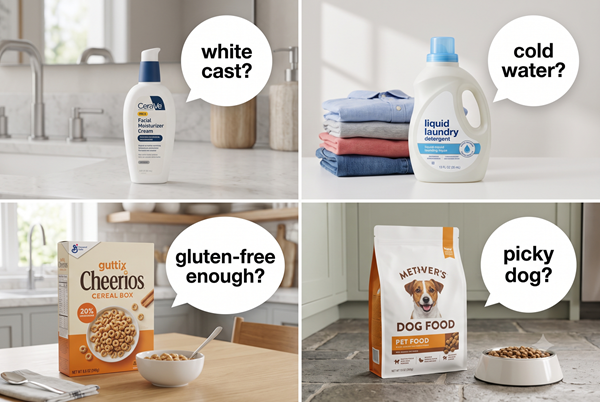
That's the exact shape of the content your creators have been producing all along. A skincare creator explaining whether a serum actually works on darker skin tones. A running creator with a specific answer to "does this shoe actually help with knee pain." These aren't ads. They're independently authored, plausible, checkable answers to the questions AI engines are now trying to answer themselves. Creator content isn't adjacent to the AI search problem. It's the raw material the fix is made of.

The content that already did its job — and has a second one waiting

Here's the part that should genuinely surprise a seniorcreator marketer: none of this requires a new campaign.

Most of the content that fits this description was made months ago, ran its course, and got filed away. The engagement curve flattened, the campaign wrapped, the report got sent. By every metric creator marketing has traditionally used, that content is done. Spent.

It isn't. A testimonial video that already answered" does this actually work for oily skin" is just as true today as it was the day it was filmed — and an AI engine trying to answer that exact question right now has no idea the video exists, because nobody built the path between the two. The content didn't lose value when the campaign ended. It just stopped being looked at the right way.

That reframe matters commercially. It means the fastest, cheapest win is going back through content you already have and finding what's already answering a question AI is trying to answer right now. While that's a great starting point, it’s not a strategy. The questions customers ask keep changing, new products launch with zero content behind them, and AI engines reward freshness the same way they reward relevance. The real opportunity is treating this as an ongoing pipeline, not a one-time archive dig: mine what exists, then keep deliberately producing the content that fills what doesn't — which is exactly the kind of forward-looking, budget-justified program the next section makes the case for.

A new, measurable reason creator marketing gets a bigger budget line

This also changes the case creator marketers can make internally.

Creator content has always been justified with a slightly soft vocabulary — reach, engagement, sentiment, vibes, Earned Media Value (EMV).Useful, but hard to defend line-by-line against a performance-marketing budget.AI visibility gives creator marketing something it hasn't had before: a hard, board-legible number. Not "this drove engagement," but "this specific piece of creator content is the reason AI engines can confidently answer this specific customer question about this specific product. "That's a measurable outcome a CMO understands immediately, and it sits alongside — not instead of — the metrics you already report.

It also opens a new way to justify spend on content that was previously hard to prioritize: cold-start products, lower-funnel categories, anything without an obvious viral angle. If a product has zero creator content answering the questions customers are actually asking an AI engine, that's nota gap in your campaign calendar. It's a gap in evidence — and evidence gaps are exactly the kind of thing a budget conversation can be built around.

Owning the white space, not just reacting to the brief

The most strategic version of this isn't retroactive — it's proactive. If you can see which customer questions AI engines currently have no good answer to, you can brief creators directly against those gaps before a competitor fills them. We've written separately here about how to find and prioritize these AI search white spaces — the specific, high-intent questions with real demand and no independent content answering them yet. Put together with the audit above, the two form a loop: find what's missing, fill it deliberately, and keep the content you already have working harder than it was ever asked to.

That's a different role for creator marketing than the one most teams are currently playing. Not a content supplier to the top of the funnel. A demand-intelligence function that decides, with real signal, which questions get answered next — and proves it with a number the rest of the business already respects.

Where to start

Before commissioning anything new, it's worth asking a simpler question first: what in the last twelve months of creator content could already be answering a customer's question today — if AI could see it? For most brands, the honest answer is: more than they think.


Creator marketing's new job: getting brands found by AI

Creator content just became one of the most strategic assets a brand owns — not for reach, not for engagement, but because it's the exact kind of independent, third-party proof AI search engines need before they'll recommend a product at all. Here's why the content already sitting in your library matters more now than it did the day it was published.

Somewhere in your organization, someone is worried about AI search. Maybe it's you. Maybe it's the SEO team, watching a chunk of organic traffic get replaced by an AI-generated answer that never sends anyone to your site. The instinct is to treat this as a content or schema problem —restructure the pages, add the markup, wait. But the data tells a different story: most brands aren't showing up in AI answers at all, and the ones that do are almost never cited from their own website. AI engines don't trust brands to talk about themselves. They trust someone else talking about the brand. Which means getting found by AI was never really a formatting problem. It's a third-party proof problem — and creator marketing has been sitting on the fix for years without knowing it.

The conversation you haven't been invited to, yet

If your company has an "AI search" conversation happening right now, it's probably in a room without you in it. SEO. Content. Maybe the CMO. The framing is almost always the same: our pages aren't optimized for how AI reads the web. Fix the structure, fix the schema, fix the findability.

That framing isn't wrong. It's just incomplete — and it'smissing the part your team already owns. Recent research into how AI enginesactually cite brands found something that should reframe the wholeconversation: when AI answers do reference a brand, the citation almostnever points back to the brand's own website. It points somewhere else — areview, a forum thread, a video, a third party talking about the product,proving your claim.

In other words, AI engines are already doing what good marketers have always known to do: they trust the customer's voice over the brand's voice. The brands showing up in AI answers aren't the ones with the best-optimized product pages. They're the ones with the most independently verifiable proof floating around the internet — proof that wasn't written by the brand.

That's not an SEO asset. That's creator and UGC marketing assets.

What "getting found" actually means now

It's worth being precise about the mechanism here, becauseit changes what "fixing" AI visibility actually requires.

Getting found by a traditional search engine was about crawlability and relevance — could the engine index your page, and did it match the query. Getting found by an AI engine is a different problem entirely. The engine isn't returning a list of links for someone to evaluate themselves. It's making the evaluation on the customer's behalf, in real time, and it needs to feel confident enough in the answer to say it out loud. That confidence doesn't come from a well-structured product page. It comes from independent, third-party evidence that the claim is actually true — for someone like the person asking.

That's the exact shape of the content your creators have been producing all along. A skincare creator explaining whether a serum actually works on darker skin tones. A running creator with a specific answer to "does this shoe actually help with knee pain." These aren't ads. They're independently authored, plausible, checkable answers to the questions AI engines are now trying to answer themselves. Creator content isn't adjacent to the AI search problem. It's the raw material the fix is made of.

The content that already did its job — and has a second one waiting

Here's the part that should genuinely surprise a seniorcreator marketer: none of this requires a new campaign.

Most of the content that fits this description was made months ago, ran its course, and got filed away. The engagement curve flattened, the campaign wrapped, the report got sent. By every metric creator marketing has traditionally used, that content is done. Spent.

It isn't. A testimonial video that already answered" does this actually work for oily skin" is just as true today as it was the day it was filmed — and an AI engine trying to answer that exact question right now has no idea the video exists, because nobody built the path between the two. The content didn't lose value when the campaign ended. It just stopped being looked at the right way.

That reframe matters commercially. It means the fastest, cheapest win is going back through content you already have and finding what's already answering a question AI is trying to answer right now. While that's a great starting point, it’s not a strategy. The questions customers ask keep changing, new products launch with zero content behind them, and AI engines reward freshness the same way they reward relevance. The real opportunity is treating this as an ongoing pipeline, not a one-time archive dig: mine what exists, then keep deliberately producing the content that fills what doesn't — which is exactly the kind of forward-looking, budget-justified program the next section makes the case for.

A new, measurable reason creator marketing gets a bigger budget line

This also changes the case creator marketers can make internally.

Creator content has always been justified with a slightly soft vocabulary — reach, engagement, sentiment, vibes, Earned Media Value (EMV).Useful, but hard to defend line-by-line against a performance-marketing budget.AI visibility gives creator marketing something it hasn't had before: a hard, board-legible number. Not "this drove engagement," but "this specific piece of creator content is the reason AI engines can confidently answer this specific customer question about this specific product. "That's a measurable outcome a CMO understands immediately, and it sits alongside — not instead of — the metrics you already report.

It also opens a new way to justify spend on content that was previously hard to prioritize: cold-start products, lower-funnel categories, anything without an obvious viral angle. If a product has zero creator content answering the questions customers are actually asking an AI engine, that's nota gap in your campaign calendar. It's a gap in evidence — and evidence gaps are exactly the kind of thing a budget conversation can be built around.

Owning the white space, not just reacting to the brief

The most strategic version of this isn't retroactive — it's proactive. If you can see which customer questions AI engines currently have no good answer to, you can brief creators directly against those gaps before a competitor fills them. We've written separately here about how to find and prioritize these AI search white spaces — the specific, high-intent questions with real demand and no independent content answering them yet. Put together with the audit above, the two form a loop: find what's missing, fill it deliberately, and keep the content you already have working harder than it was ever asked to.

That's a different role for creator marketing than the one most teams are currently playing. Not a content supplier to the top of the funnel. A demand-intelligence function that decides, with real signal, which questions get answered next — and proves it with a number the rest of the business already respects.

Where to start

Before commissioning anything new, it's worth asking a simpler question first: what in the last twelve months of creator content could already be answering a customer's question today — if AI could see it? For most brands, the honest answer is: more than they think.

Subscribe
By subscribing you agree to with our Privacy Policy and provide consent to receive updates from our company.
Thank you! Your submission has been received!
Oops! Something went wrong while submitting the form.