.png)


AI was nearly impossible to miss at Shoptalk Fall in Nashville. eMarketer's analyst Suzy Davidkhanian noted that almost every exhibitor put it front and centre in their messaging, alongside agentic commerce and personalization. Lindsay, who spent much of the show on the floor, saw the other side of that: many people are still trying to make sense of what AI means for their business.
“Amid the focus on AI, agentic commerce, and personalization, a more fundamental question kept surfacing: What makes a brand worth choosing in the first place?”
eMarketer's Suzy Davidkhanian
Our take on the agentic hype
We think the agentic conversation is running ahead of reality. Shopify's rollout of UCP to some 4 million merchants was meant to make brands easier for AI to work with, and it does at a transactional level, but we haven't seen it move the needle: Shopify brands seem no more visible to AI as a result.
That's because agentic infrastructure is answering a different question. Plumbing lets an AI agent reach your products and potentially transact. It doesn't give the agent a reason to recommend them, which is the elephant in the room.
Two things make the hype look even more overblown in practice:
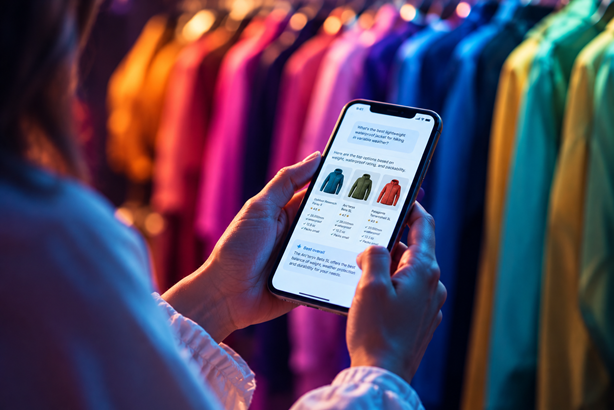
• AI is one step in a longer journey. A shopper might use AI to build a shortlist, then check reviews, compare prices and buy on Amazon, in store or through a search days later. The AI answer shapes the decision, but the sale lands somewhere else.
• AI's influence is large and nearly impossible to track. There's no click or referrer to trace back to an individual sale. It works like a billboard on a desert highway: it moves choices, but nobody gets a receipt. That makes it easy to dismiss and easy to overclaim.
The real problem is trust
Davidkhanian's line sums it up: "AI isn't the strategy." Technology gets everyone to the same starting line. What differs is whether you're worth choosing.
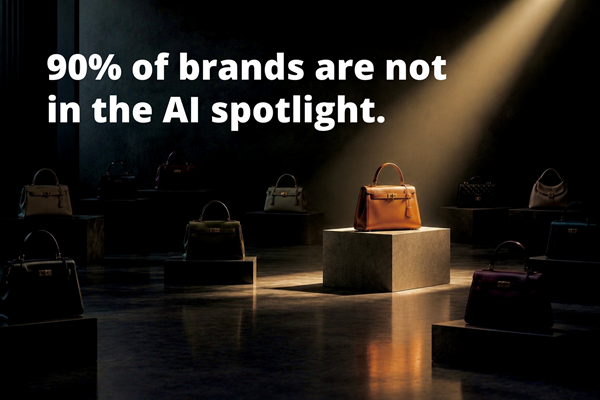
The data shows how wide that gap is. Victorious's Q2 2026 report looked at 175 brands across five verticals. Almost all of them (96%) were described accurately when an AI engine was asked about them by name. Yet around 90% were never mentioned when the question was about their category. AI knows who these brands are and doesn't recommend them.
Brand-owned copy is information, not proof. What gets a brand named is independent, third-party evidence: real buyer and creator testimony that the brand didn't write and can't edit. That matches the community and authenticity theme the show kept returning to, in a form a machine can verify.
For brands heading into 2027:
• Don't wait for a full playbook, and don't wait for agents. Nobody at the show had either.
• Audit your evidence, not just your infrastructure. What independent proof backs your key claims, and can a machine read it?
• Measure influence, not just clicks. Much of AI's effect never shows up as a tracked sale.
The question for brands isn't whether AI can reach them. It's whether AI trusts them enough to recommend them.