.png)


This guest blog shares original primary research from Youlanda Naamani, a digital marketing researcher of Kings College London, exploring how virtual influencers shape Gen Z’s perception of luxury fashion brands.
The key question behind this research was simple: can Gen Z emotionally connect with virtual influencers in luxury fashion? To explore this, I carried out semi-structured interviews with Gen Z consumers across the UK. A qualitative approach was essential since emotional connection can’t be measured in numbers. I needed depth, nuance, and real reactions to the visuals shown during the interviews. Semi-structured interviews allowed participants to speak freely, reveal contradictions, and share raw opinions that a survey could never capture.
GenZ and Virtual Influencers
You’d think Gen Z would be the first to fall in love with virtual influencers, right?
This is the generation raised on filters, avatars, artificial intelligence, and every hyper-real visual trend you can imagine. On paper, virtual influencers should be their thing; the natural next step in luxury marketing. But shockingly, the reality couldn’t have been more different.
The minute I began speaking to real Gen Z consumers, the entire assumption collapsed. What should have felt futuristic and exciting instead revealed something unexpected: a huge emotional disconnect. Across the interviews, the same message kept hitting me again and again: virtual influencers may look perfect, but Gen Z feels absolutely nothing toward them.
No spark. No connection. No emotional pull.
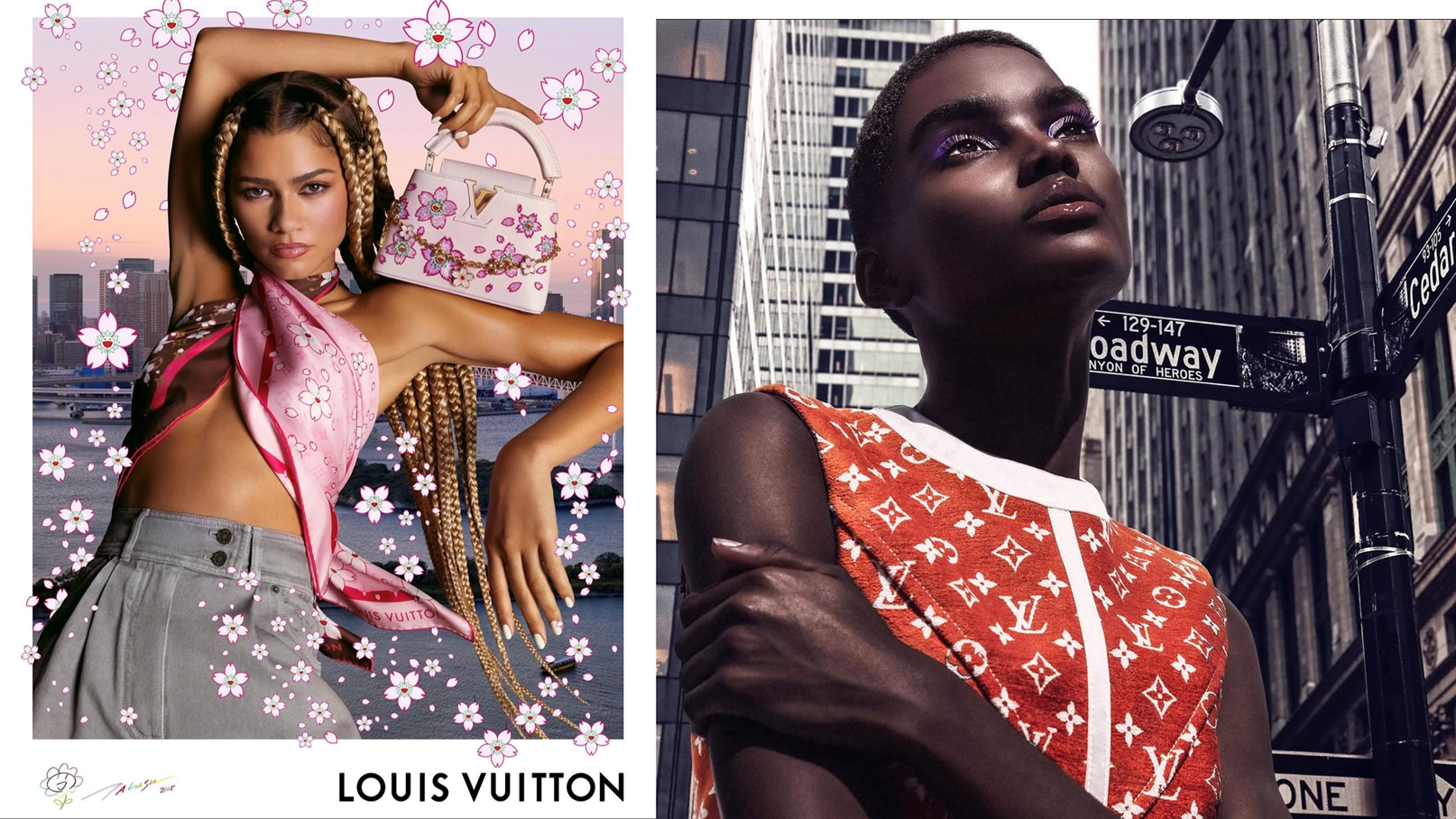
Not even an understanding of how Lil Miquela has 2.3M followers; the logic simply didn’t add up for them. To understand why, I showed participants two Louis Vuitton campaigns side by side: one featuring Zendaya, the globally recognised American celebrity, and one with Shudu, the world’s first digital supermodel representing everything “future-forward” in luxury.

The reactions were surprisingly… intense. When participants looked at Zendaya’s post, their responses were immediately related to “emotion,” “story,” and “human expression.” One described her as “emotionally intelligent and culturally grounded,” noting how her expression carries a passion that feels undeniably real. Another said, “With Zendaya, every image has a story behind it.” That was the key. It wasn’t just the visuals; it was the emotion. The humanity. The lived experience. It was the human in the image that made the luxury feel alive. The story of Zendaya herself: a girl who worked her way up and became the woman the world admires today.
Shudu, on the other hand, fascinated participants for entirely different reasons. Her image was “technically perfect,” “aesthetic,” and “hyper-real.” The admiration was genuine, but shallow. They were impressed but couldn’t resonate with the perfection. “She looks like digital art, creative but without life,” one said. Another participant captured it sharply: “It’s stunning… but I don’t feel anything. No connection, no narrative.” “Perfect” came up repeatedly, not as a compliment, but to emphasise the emotional emptiness and disconnect. One even called Shudu “a mannequin,” frozen in a visual that lacked the warmth that luxury usually thrives on.
Virtual Influencers feel emotionally vacant
This reaction echoed throughout every conversation. Gen Z didn’t reject virtual influencers because they’re digital; they rejected them because they felt emotionally vacant. As the conversations deepened, this emotional gap became the center of everything. It wasn’t just about influencers anymore; it became a clearer reflection of what luxury means to Gen Z. For them, luxury isn’t just aesthetics. It’s history, story, personality, heritage, and craftsmanship that shape the cues only a human can carry.
When Zendaya poses, they don’t just see the product; they see her. Her presence, her culture, her lived experiences, the emotion behind her gaze. There’s life in her images that no algorithm can engineer. Shudu, in contrast, felt rootless; visually perfect but emotionally hollow, “branding for the sake of branding,” as one participant said. Another pointed out the difference in effort: Zendaya’s campaign felt like a full-scale production: travel, long hours, and a large creative team. Shudu felt like the output of a small group working behind a screen, assembling visuals rather than capturing genuine moments.
And that’s precisely where the tension sits: virtual influencers work as images… but they fail as characters. They deliver polish, not presence. Style, not soul. What this reveals is powerful: Gen Z isn’t rejecting innovation. They’re rejecting emotional emptiness. They are fond of creativity, futurism, and visual experimentation, but only when it still feels human.
Virtual influencers work as images… but they fail as characters. They deliver polish, not presence. Style, not soul.
Luxury doesn’t win by looking perfect. Luxury wins by feeling alive.
And that’s the part virtual influencers can’t fake. They can mimic lighting, texture, and angles, but not the soul behind the eyes, the lived experience, the story that gives luxury its emotional gravity.
Best practise Recommendations for brands and retailers
Virtual influencers will inevitably have a place in luxury’s future, but not as replacements for humans.
The strongest path forward is a hybrid one: innovation from virtual personas paired with the emotional pull of human storytelling. In luxury, visuals attract, but emotions convert. And Gen Z, the generation supposedly made for the virtual world, still chooses a heartbeat over a highlight. Maybe we’re not as doomed as we thought after all… for now.
Virtual Influencers: Q&A
Q: What is a virtual influencer?
A virtual influencer is a digital, computer-generated character created using CGI, 3D modelling, or artificial intelligence. These influencers are designed to behave like human social media personalities, posting content, endorsing products, and interacting with audiences online. Unlike traditional influencers, virtual influencers do not have a physical presence but can maintain a consistent, visually appealing persona across platforms.
Q: Why are brands using virtual influencers?
Brands use virtual influencers because they provide consistency, full creative control, and cost efficiency. They never age, avoid public scandals, and have no scheduling conflicts. Virtual influencers can appear in any location virtually, making it easy for brands to execute complex, globally coordinated campaigns. They are particularly useful for high-concept visuals, experimental brand experiences, and metaverse or AR activations, where real human influencers may face limitations.
Q: Can virtual influencers succeed even if Gen Z does not emotionally connect with them?
Yes. Virtual influencers can be effective when used strategically alongside human influencers in a hybrid marketing approach. Research shows that Gen Z expects storytelling, authenticity, and human emotion from influencers. Virtual influencers are strong at delivering visual innovation and controlled branding, but alone they cannot replicate the emotional engagement and relatability that drive conversions.
Q: Are virtual influencers authentic?
Virtual influencers can be considered authentic in terms of creativity, design, and visual innovation. However, they are not authentic in a human sense. Gen Z and other audiences often admire their aesthetics but do not “resonate” with them emotionally. They are seen more as digital art or brand tools rather than influencers with personal stories, experiences, or cultural authenticity.
Q: Do virtual influencers affect brand trust?
The effect on brand trust largely depends on the brand’s credibility. Well-established brands with strong reputations can use virtual influencers without harming consumer trust. Transparency is crucial: audiences want to know that the influencer is computer-generated and understand why the brand is using a virtual persona. Clear disclosure prevents feelings of deception and maintains trust.
Q: What type of influencer content do consumers value most?
Research, including SimplicityDX’s Why They Buy research study, shows that the most valued influencer content is authentic product reviews, particularly in video format. Audiences prefer real-world context such as “try-on with me,” “makeup with me,” or other demonstrations of how products perform in daily life. Traditional website reviews are increasingly mistrusted because they can be manipulated or overly positive. Virtual influencers cannot deliver this type of content authentically, making human influencers essential for reviews, tutorials, and product demonstrations.
Q: In which areas are virtual influencers most effective?
Virtual influencers excel in areas that require creativity and visual control, such as:
- Experimental campaigns and high-concept visuals
- Digital fashion presentations and AR try-ons
- Immersive brand experiences and world-building
- Metaverse activations and virtual events
- Playful or highly stylized content
They are less effective for emotional storytelling, product reviews, or content requiring lived experience and authenticity.
Q: Who controls a virtual influencer’s online presence?
Every action of a virtual influencer—what they post, wear, or promote—is fully controlled by the creative team or the brand. This ensures consistency, brand alignment, and risk mitigation. Virtual influencers cannot act spontaneously; every detail of their presence is planned, designed, and approved in advance.
Q: How should brands use virtual influencers effectively?
Brands should integrate virtual influencers as part of a hybrid strategy, combining their strengths in visual innovation with human influencers’ emotional and experiential value. Virtual influencers are ideal for:
- Capturing attention through creativity
- Supporting immersive brand campaigns
- Experimenting with new digital formats
Human influencers remain critical for:
- Emotional engagement and storytelling
- Authentic product reviews and tutorials
- Relatability and cultural resonance
Using virtual and human influencers together allows brands to maximize reach, engagement, and trust while maintaining authenticity.