.png)


Influencer marketing continues to be one of the most effective ways for brands to generate high-intent traffic. But the traffic alone is not the win — it’s the conversion that happens on your ecommerce site, and that requires delivering a seamless, contextual experience immediately after the influencer posts. This is why influencer pages have become a critical component of social-commerce infrastructure.
This guide examines — in depth — what it takes to build best-in-class influencer pages on your ecommerce domain. We explore required components, operational complexities, and proven best practices.
1. Timing
Influencer posts have extremely fast attention decay. According to a large-scale analysis of social media interactions, more than 80 % of all engagement with a post occurs within the first 24 hours of publishing, with more than 40% happening within the first hour alone. This rapid decay highlights the urgency of getting influencer pages live immediately after the influencer posts — delays of even a few hours can mean missing the majority of high-intent traffic.
Your influencer pages must be synchronized with the influencers post going live, or within minutes of it going live.
Any delay risks missing the peak click-through window, which directly reduces revenue impact.
Best Practice: Develop a fast publishing workflow that enables influencer pages to go live right after the social post is published. The faster the page appears, the higher the conversion potential.
2. Preserve Context
The power of influencer content comes from the authenticity and relatability of the story. Your influencer page should extend that story, not break it.
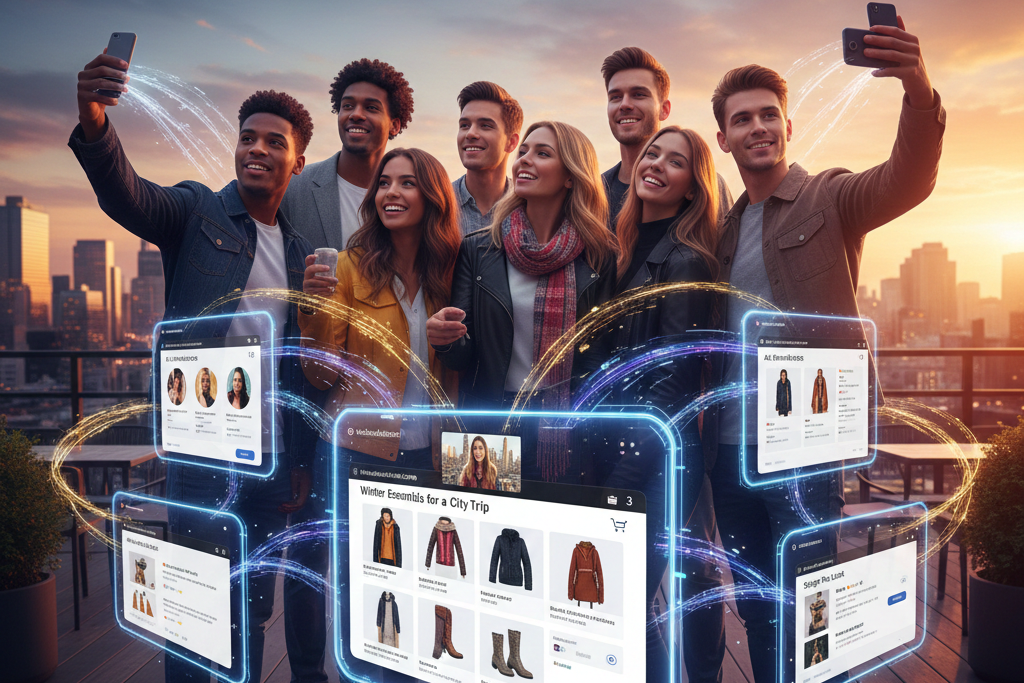
For example, if an influencer posts a TikTok about “Winter Essentials for a City Trip,” the landing page should:
- Lead with the same theme
- Echo the language and tone
- Show the exact video that the shopper clicked from
- Merchandise the products as an integrated set
Best Practice: Create a unique page for each post, preserving the narrative context so the shopper feels continuity between social content and your ecommerce experience.
3. Use Media From the Original Post
Embedding the influencer’s media at the top of the page ensures that the shopper:
- Knows they’re in the right place
- Recognises the content instantly
- Can refer back to the video without leaving the page
- Stays oriented and confident in the navigation path
Video or images from the original post can also demonstrate fit, movement, use cases or styling inspiration — all of which increase purchase intent.
Best Practice: Always lead influencer pages with the exact image or video from the influencer’s post.
4. Use a Dedicated Subdomain
Influencer pages should not interfere with the architecture of your main ecommerce site. The most effective structure is a dedicated subdomain, such as:
influencers.brandname.com
This approach:
- Gives influencers a prestige space that is still 100% on-brand
- Builds trust by signalling to shoppers that they are on the official brand domain
- Allows your ecommerce team to manage influencer pages without disrupting core site navigation or SEO
Avoid placing influencer content on third-party domains, as this can raise trust issues and reduce conversion.
Best Practice: Host all influencer pages on a dedicated, branded subdomain that mirrors your primary site’s design system.
5. Maintain Brand Continuity
Strong branding reassures shoppers and maintains design credibility. Your influencer pages should include:
- Identical fonts, logos and colours as your ecommerce site
- Primary brand navigation to make it easy for shoppers to visit the main site
- Influencer identity elements such as photo, short bio and links to their social profiles
The only visual difference should be that the page lives on your influencer subdomain and the specific influencer collab content.
Best Practice: Build influencer pages that look and feel like a natural extension of your ecommerce brand, with clear co-branding.
6. Sync Products in Real-Time
Shoppers clicking through to influencer pages are looking for the featured products — quickly. Your pages must integrate with you're commerce engine so they show:
- Current stock status
- Size/colour variants
- Accurate pricing
- Recommended alternatives when items are out of stock
If even one product featured in the influencer post is unavailable and no substitute is shown, conversion drops sharply.
Best Practice: Synchronize influencer pages directly to your live ecommerce catalogue.
7. Tag All Products
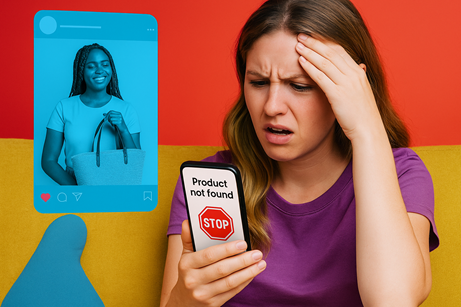
The purpose of influencer pages is to help shoppers find the right products immediately. SimplicityDX research shows that 86% of shoppers complain about difficulty finding products from influencer posts.
This is why linking to a single product detail page (PDP) is insufficient. Shoppers lose context, and multi-product inspiration gets lost.
Instead, your influencer pages should:
- Display all products featured in the influencer’s post
- Include product details sourced directly from your ecommerce backend
- Make it easy to switch between the different products featured in the post without laving the page
Best Practice: Tag every product mentioned in the post so shoppers can buy the full set without leaving the page.
8. Add a Mini Cart
A mini cart embedded on the influencer page allows shoppers to:
- Add multiple products directly from the influencer content
- Stay within the narrative context
- Proceed to checkout with fewer clicks
This reduces abandonment caused by navigation friction.
Best Practice: Use a lightweight mini cart connected to your core checkout.
9. Build An 'All Influencers' Page
To maximise traffic and long-term value, create an aggregate view of:
- Your latest influencer posts, showing the latest posts at the top, creating an incentive for influencers to post regularly
- The ability for shoppers to search by influencer
- The ability to search by products featured by influencers
Link this from your main navigation, email campaigns and organic social posts.
Best Practice: The “All Influencers” page becomes a recurring destination that amplifies campaign value.
10. Never-Expiring Links
Influencers need a single, durable link that they can place everywhere:
- Link in Bio
- YouTube descriptions
- TikTok profiles
- Instagram Stories (where clickable links are supported)
Because content recirculates and shoppers revisit old posts, avoid links that expire or point only to individual campaigns.
Best Practice: Assign each influencer a permanent home page summarising all of their content and influencer pages which is updated every time the influencer posts.
11. Use Trackable Links
Influencer pages must support measurement. This means giving each influencer (and each post) a trackable link that can quantify performance.
Your options include:
- UTM parameters to measure traffic and conversion in analytics platforms
- Promo codes to attribute purchases directly to influencers
- Affiliate links that integrate with performance marketing systems and enable influencers to earn commissions
Each method has benefits — and many brands use all three in combination for redundancy and deeper insights.
Best Practice: Use structured, unique tracking parameters so all influencer traffic maps cleanly to revenue.
12. Merchandising
Once a shopper lands on your influencer page, you need to merchandise effectively to maximise the chances of a conversion. This means:
Promote Complementary and Alternative Items
Even if the featured product is not the perfect match for the shopper, offer:
- Coordinating items
- Upsell recommendations
- “Shop the look” combinations
- Navigation of other categories
- Similar products at different price points
Include Email Signup
Because social traffic may not convert immediately, use an unobtrusive email capture element to:
- Grow your CRM
- Trigger follow-up flows
- Maintain long-term relationship value
Leverage Product Reviews
Reviews are particularly powerful when placed near product cards:
- They reinforce legitimacy
- They reduce purchase hesitation
- They build trust in unfamiliar shoppers
Best Practice: Treat influencer pages as high-intention entry points that should be fully merchandised to maximise conversion potential and increase Average Order Value.
13. Test and Optimise Influencer Pages
Testing influencer pages is uniquely challenging because traffic peaks rapidly and decays within hours. However, optimisation is still essential.
Use tools like Microsoft Clarity to watch session replays and understand:
- Where shoppers hesitate
- What elements draw attention
- Which sections cause abandonment
While each individual influencer page receives short-lived traffic, they should remain live permanently to capture long-tail traffic from ongoing recirculation of social content.
Best Practice: Use aggregated behavioural data from multiple influencer pages to inform template-level improvements, or leverage AI tools to automatically optimize pages.
The Complexity of Building and Managing Influencer Pages Manually
While all the practices above are proven, they come with operational challenges:
- High design, development and publishing overhead
- Coordination with influencer posting schedules
- Time-sensitive updates to product stock and details
- Repetitive page creation for each individual post
- Continuous monitoring and optimisation
For brands scaling influencer operations across dozens or hundreds of creators, this manual model quickly becomes unsustainable.
The Automated Alternative: SimplicityDX
SimplicityDX eliminates the manual overhead by automatically generating influencer pages whenever an influencer posts.
SimplicityDX technology automates:
- Page creation immediately after each influencer post
- Media extraction and context matching
- Product tagging and ecommerce data synchronisation
- Brand-consistent layouts and influencer identity components
- Publishing to a dedicated influencer subdomain
- Tracking links, attribution parameters and analytics
- Automatically building ‘all influencers’ pages
The result is a scalable, automated system that ensures brands never miss the conversion opportunity window and consistently deliver best-in-class influencer pages without additional operational burden.
Q&A: Influencer Pages Explained
Q: Why do influencer pages matter?
A: Shoppers arriving from influencer content are highly motivated and expect an immediate, seamless path to the products they just saw. Influencer pages preserve continuity, context and clarity, eliminating friction in buyer journeys that begin on social media. Higher conversion rates enable marketers to demonstrate the direct sales impact of their influencer programs.
Q: How fast do influencer pages need to go live?
A: Immediately after the influencer posts. Engagement decays rapidly, so any delay reduces revenue, frustrates customers and diminishes the value of the influencer’s reach.
Q: Can influencer pages improve attribution?
A: Yes. UTMs, promo codes and affiliate identifiers allow brands to track traffic, conversion and revenue with precision, creating clear, defensible ROI metrics.
Q: Should influencer pages stay live after the campaign?
A: Yes. Although post-driven traffic decays quickly, pages continue to capture long-tail clicks from older posts, recirculated content and SEO.
Q: How many products should be included?
A: Every product featured in the influencer’s content should appear on the page, supported by recommendations and alternatives. Enabling shoppers to buy all items shown without leaving the page is essential for maximizing average order value.
Q: Do influencer pages need a dedicated subdomain?
A: Strongly recommended. A dedicated subdomain reinforces trust, supports consistent branding and isolates influencer content operationally so it does not interfere with core ecommerce workflows.
Q: What is the biggest challenge with influencer page optimization?
A: Because traffic peaks and drops within hours, it is nearly impossible to run A/B tests long enough to reach statistical significance. Brands can use aggregate insights across multiple pages, use tools like session replays to identify friction and improve templates. But the ideal approach is to use an AI based approach that automatically optimizes pages as shoppers engage with different elements on the page (as SimplicityDX does).
Q: How can influencer pages be maintained at scale?
A: Manual maintenance quickly becomes unmanageable, particularly when using permanent links, using an “all creators” page and with influencers that post frequently. Updating pages individually becomes a substantial operational burden and a barrier to program growth. The solution is either a streamlined workflow or to use automation to build and maintain influencer pages automatically.
Q: How long does it take to build an influencer page?
A: Under a manual process, building a single influencer page can take several hours when you account for design, media embedding, product tagging, QA, publishing and link verification. In larger organizations, the work is often split across multiple teams — marketing provides the brief and assets, design handles layout and creative, ecommerce teams manage product data and integrations, and conversion optimization teams review for best practices. This cross-functional workflow significantly increases coordination requirements, slows turnaround time and makes it difficult to publish pages fast enough to capture the peak engagement window after an influencer posts.
Q: Which influencers should get their own page?
A: A tiered approach works best. Providing dedicated pages to top-performing or long-term partners reinforces status and recognition, while giving emerging influencers something to aspire to as they deepen their relationship with the brand.
Q: How can “all influencer” pages be used to motivate influencers?
A: An “all influencers” page typically surfaces the latest content at the top. This visibility can be used as a motivational tool, encouraging influencers to post regularly so their content remains prominently featured.
Q: What should influencer pages do when featured products are out of stock?
A: Out-of-stock items should remain visible on the influencer page so shoppers understand what the influencer was promoting, but they must be supported with clear alternatives. Surface visually similar products, updated versions, or complementary items directly beneath the unavailable SKU. This approach preserves context from the original post while preventing dead ends that frustrate shoppers and depress conversion.
Q: How should brands handle products that have been discontinued?
A: When a product has been permanently discontinued, keep the original item visible for context but clearly mark it as no longer available. Replace the purchase option with a curated set of recommended substitutes — ideally newer models, similar styles or products that serve the same use case. Maintaining the discontinued item on the page ensures continuity with the influencer’s content, while presenting suitable alternatives protects both the shopper experience and revenue opportunity.
Q: How does SimplicityDX help?
A: SimplicityDX automates influencer page creation — including media extraction, product tagging, context preservation, analytics setup and publishing — transforming influencer content into real-time, conversion-ready commerce experiences without any operational overhead.